

:max_bytes(150000):strip_icc():format(jpeg)/TAL-lead-image-JUICEJACKING0625-a4b1d8fdb5b24e21a31f08b4e990c498.jpg)
- The Transportation Security Administration (TSA) warned travelers about the rare but possible risk of “juice jacking” at USB ports.
- While many experts say the practice is more theoretical, with few confirmed cases, it can occur when criminals install malware in public charging stations.
- Use portable battery packs or check device prompts to stay safe while charging.
When was the last time you used a USB charging station at the airport? According to the Transportation Security Administration (TSA), you should think twice before charging your phone at one of them.
“Hackers can install malware at USB ports (we’ve been told that’s called ‘juice/port jacking’),” the TSA advised travelers on Facebook in March 2025. “So, when you’re at an airport, do not plug your phone directly into a USB port. Bring your TSA-compliant power brick or battery pack and plug in there.”
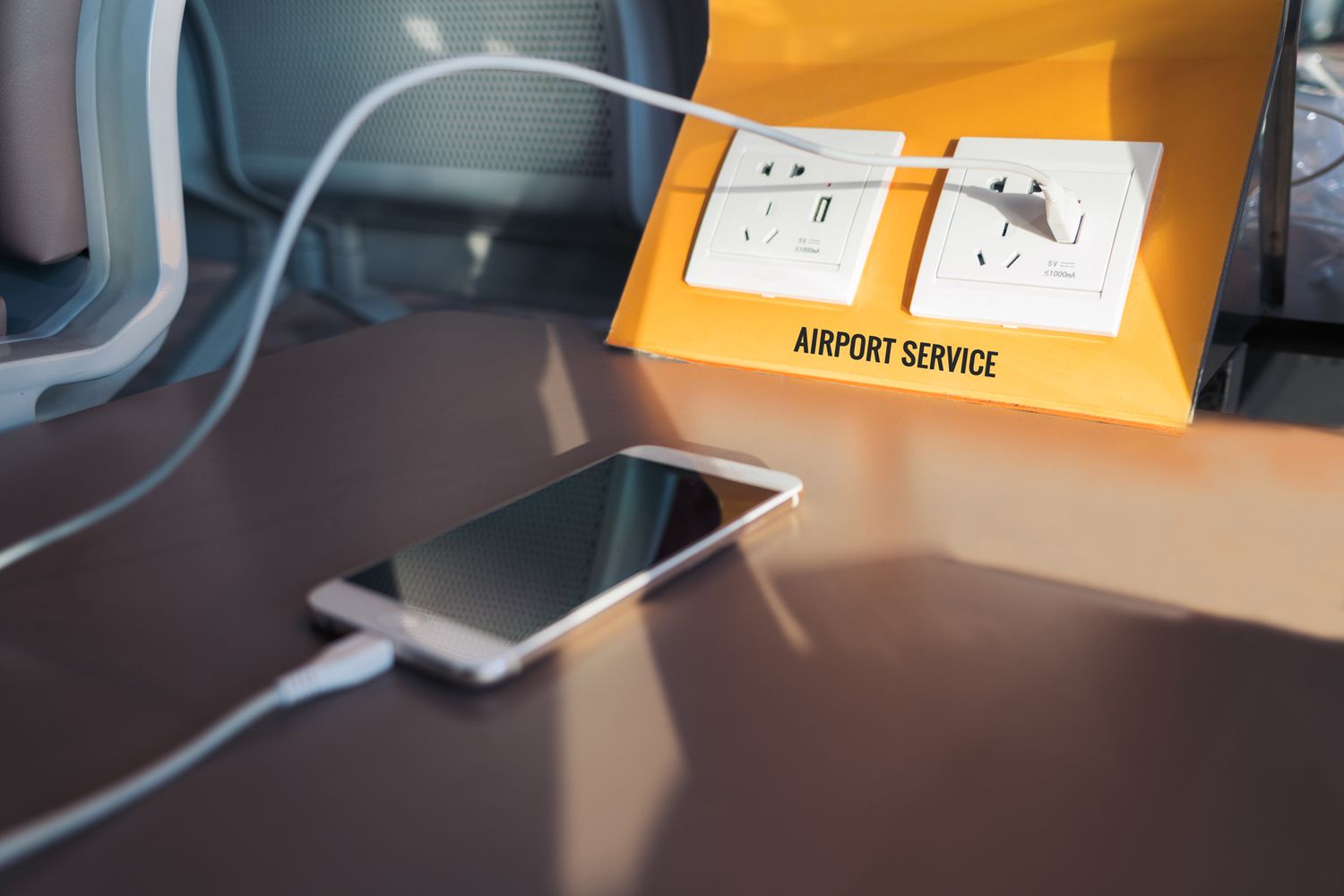
The warning sparked fresh concern about “juice jacking,” a cyberattack where criminals install malware on public charging stations in order to steal data from connected devices.
But just how real is this threat for everyday travelers? We asked a few experts.
The Reality Check
Margot Cavin / Travel + Leisure
According to Calum Bairda digital forensics expert, juice jacking is more theoretical than anything else. Despite the alarming warnings circulating online, Baird says he hasn’t encountered any actual cases in his professional experience.
“I see it pop up online every now and then, but most, if not all, modern smartphones now require confirmation prior to data transfer via USB,” Baird says.
Baird notes that even if travelers encounter compromised charging stations, most modern devices have built-in protections. Baird’s personal experience is also backed by the Federal Communications Commission. On its website, the organization states that although it is technically possible, they are not aware of any confirmed cases of juice jacking.
Be Cautious of Cables
Grace Cary / Getty Images
Danny Jenkins, cofounder and CEO of ThreatLockeroffers another perspective on what travelers should actually worry about, pointing to an unexpected source: deceptive USB-C cables.
“Shady USB-C cables likely pose the greater risk, partly because the dangers of public charging ports are more widely known,” he says.
Jenkins says that people have become more aware of the dangers associated with public charging stations, so they’re more cautious about using them. However, many travelers don’t think twice about buying a cheap charging cable from a questionable vendor at an airport shop or online marketplace, making these cables a more successful point of attack.
“Attackers are always searching for new exploits,” says Jenkins. “While upcoming measures may mitigate issues related to juice jacking, vulnerabilities could still emerge as attackers gain access to new USB technologies and attempt to bypass these protections.”
How to Protect Yourself
Margot Cavin / Travel + Leisure
While it’s hard to find reports of actual juice jacking cases, it’s always a good idea to take extra precautions, just in case. Jenkins says that portable battery packs can help mitigate the chances of a juice-jacking attack.
If you don’t have any other options aside from a public charging station, Jenkins recommends checking for signs of tampering on the USB port area. Baird adds that you should also check your phone as you plug it in. “If it’s asking you to trust a device you’ve connected to, decline,” he says. “It doesn’t need data transfer to charge.”
While juice jacking remains largely theoretical, the TSA’s cautious approach makes sense given the high-traffic nature of airports and the valuable data stored on travelers’ devices. However, modern smartphones have built-in protections, and a few simple precautions can drastically eliminate any risk.
Instead of avoiding public charging entirely, travelers can stay safe by bringing their own charging equipment, paying attention to device prompts, and being selective about where they source cables and adapters. After all, a dead phone battery poses a more immediate risk than juice jacking for most travelers.